




Introduction
Automatic sand sieving machine is a device used to classify sand by particle size, widely applied in industries such as construction, building materials, foundry, and chemical engineering. Below is a detailed introduction to sand screening machines:
Main Types
Sand screening machines can be categorized into the following types based on their working principles and structure:
(1)Vibrating Sand Screen
Uses a motor-driven vibrator to generate high-frequency vibrations, separating sand through screens with different mesh sizes.
Advantages: High efficiency, large processing capacity, suitable for medium and fine particles.
Disadvantages: Noisy, requires regular maintenance of vibrating components.
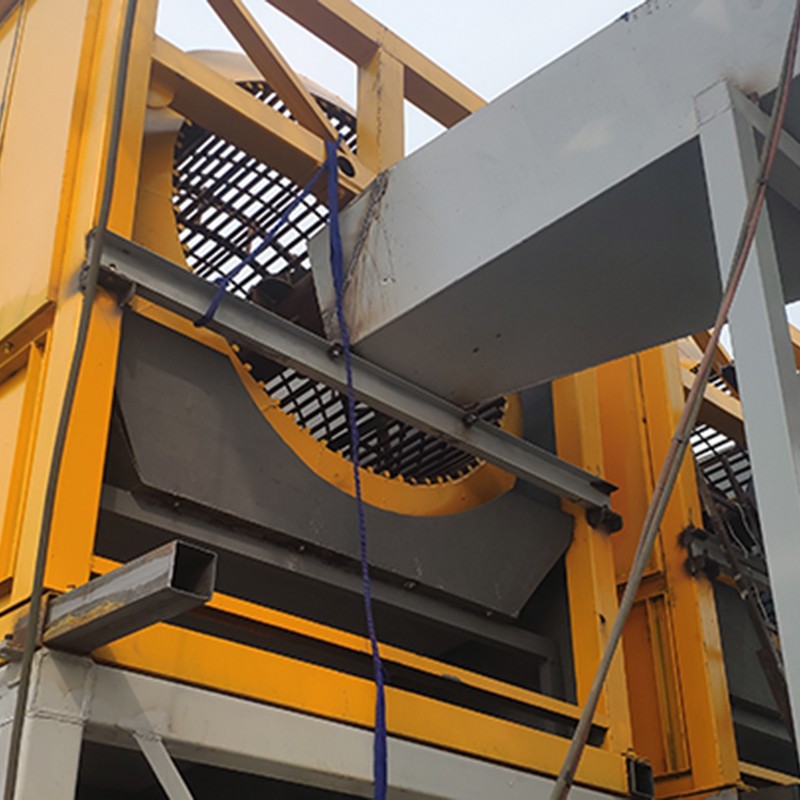
(2)Rotary Trommel Screen
Features a rotating drum structure where sand rolls inside and is graded through screen openings.
Advantages: Simple structure, stable operation, suitable for wet or sticky sand.
Disadvantages: Lower screening precision, occupies more space.
(3)Linear Sand Screen
Uses linear reciprocating motion to screen sand, commonly used for coarse particles or large-scale production.
Advantages: High processing capacity, easy maintenance.
(4)Mobile Sand Screen
Equipped with wheels or tracks for easy relocation, ideal for temporary construction sites or open-field operations.
Automatic sand sieving machine Key Components
(1)Screen Mesh: Determines grading accuracy, typically made of wear-resistant steel wire, polyurethane, or rubber.
(2)Power System: Electric motor, diesel engine, or hydraulic drive.
(3)Support/Vibration Mechanism: Springs, eccentric shafts, or vibration motors.
(4)Inlet & Outlet: Design affects conveying efficiency and dust control.
|
Small sand screeners |
10–50 m³/h |
|
Medium sand screeners |
50–200 m³/h |
|
Large sand screeners |
200–500 m³/h |
|
Capacity |
(20-300m³/h) |
|
Particle Size |
(0.1-20mm) |
|
Power |
(7.5-37kW) |


Applications
(1)Construction Industry: Separates construction sand (coarse, medium, fine).
(2)Foundry Industry: Screens molding sand to ensure casting quality.
(3)Agriculture/Gardening: Improves soil or seedling substrates.
(4)Water Treatment: Filters sand for filtration media.
Selection Criteria
(1)Processing Capacity: Choose a model based on hourly screening requirements (e.g., 5-100 tons/hour).
(2)Screening Precision: Select single or multi-layer screens with appropriate mesh sizes.
(3)Material Characteristics: Consider moisture, stickiness, and impurity content (e.g., rotary screens for wet sand).
(4)Environmental Requirements: Enclosed designs reduce dust; low-noise models for noise-sensitive areas.
Maintenance & Common Issues
(1)Regular Checks: Screen wear, loose fasteners, bearing lubrication.
(2)Common Faults:
(2.1)Screen clogging → Clean or replace the screen.
(2.2)Abnormal vibration → Inspect motor or counterweights.
(2.3)Reduced output → Adjust inclination angle or feeding speed.
Q&A
(1)Q:Can l visit your factory?
A:By all means, we warmly welcome your arrival, Before you take off from your country, please let us know. We will show you the way and arrange time to pick you up if possible.
(2)Q: Can I request to change the form of packaging and transportation?
A:Due to the substantial size of our vessels, we use standardized packaging for all units. For overseas shipments, we exclusively arrange transportation through container ports to ensure secure and efficient delivery.

Hot Tags: automatic sand sieving machine, China automatic sand sieving machine factory, Automatic Sand Sieving Machine, Mineral Processing Equipment, rotary sand screening machine, sand making and sand washing machine, spiral sand washer, spiral sand washing machine


